

The Computer Mouse
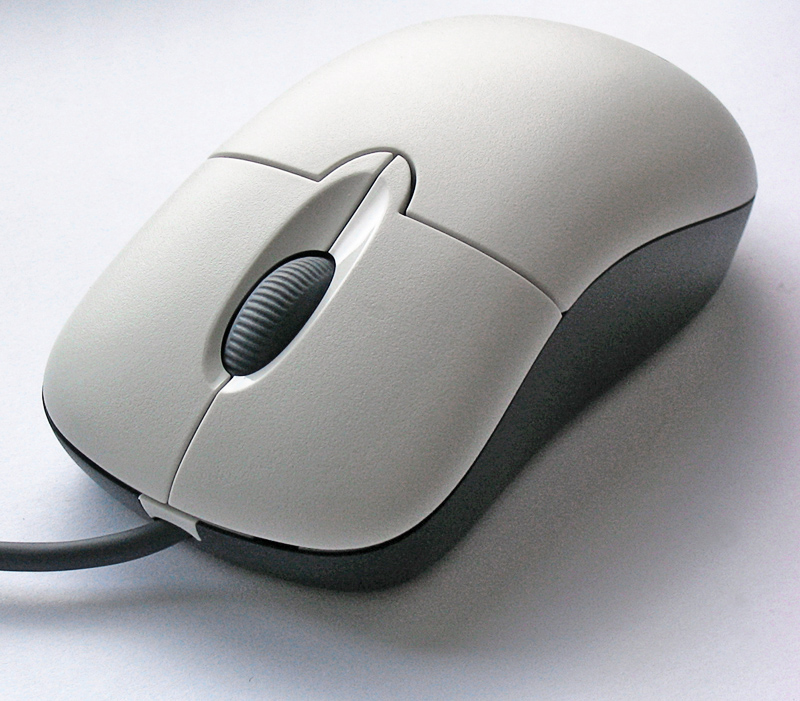 COMPUTER MOUSE
Some time ago, on the off chance that you'd seen a mouse in your room, you may have shouted and hopped up on the work area. Today, the mouse has hopped around your work area rather: it's the helpful little pointer that makes your PC simple to utilize. The primary mouse was made of wood and structured more than four decades prior in 1961. Today, mice sell by the million and scarcely a PC ship without one. They've changed a lot at that time yet they despite everything work similarly. We should investigate!What is a PC mouse?
A mouse is something you push along your work area to make a cursor (pointing gadget) proceed onward your screen. So what a mouse needs to do is make sense of the amount you're moving your hand and in which bearing. There are two principal sorts of mice and they carry out this responsibility in two distinct manners, either utilizing a moving elastic ball (in a ball-type mouse) or by skipping a light of your work area (in an optical mouse).Optical mouse
An optical mouse works extraordinarily. It sparkles a brilliant light down onto your work area from a LED (light-producing diode) mounted on the base of the mouse. The light ricochets straight back up off the work area into a photocell (photoelectric cell), likewise mounted under the mouse, a short good ways from the LED. The photocell has a focal point before it that amplifies the reflected light, so the mouse can react all the more exactly to your hand developments. As you push the mouse around your work area, the example of reflected light changes, and the chip inside the mouse utilizes this to make sense of how you're moving your hand.Some optical mice have two LEDs. The first sparkles light down onto the work area. The light from that is gotten by the photocell. The subsequent LED illuminates a red plastic strip along the rear of the mouse so you can see it's working. Most optical mice additionally have a wheel at the front so you can scroll pages on-screen a lot quicker.
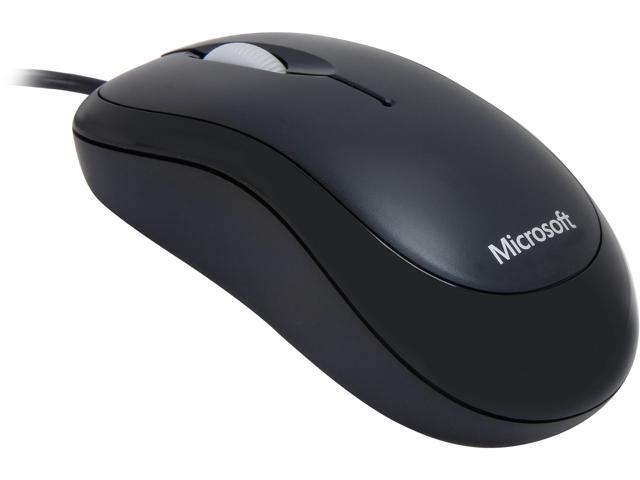 You can tap the wheel as well, so it capacities like the third (focus) button on an ordinary ball mouse.
How does a remote mouse work?
There's nothing especially unique about remote mice. They make sense of your hand developments in the very same manner, yet send the information to your PC utilizing a remote association (commonly Bluetooth) rather than a USB link. USB doesn't just convey information: it additionally gives the ability to little module gadgets like mice. Without that power, remote mice need at least one batteries (which includes a concealed running expense) and are along these lines somewhat heavier than wired ones (not excessively that issues a lot of when they're around your work area). Bluetooth associations can be battery hoards so you may end up supplanting your mouse batteries more frequently than you'd like; when each couple of months appears to be ordinary, however in case you're utilizing rechargeables, that may tumble to once per week—and a few mice brag battery life of 12 two years. On the off chance that you utilize your PC continually, what will you do if your mouse batteries out of nowhere run level? If you use rechargeables, that will happen all the more regularly and be a greater amount of an issue. Luckily, a few mice do have battery-level pointers or methods for notice you when the batteries are going to give out. All things being equal, you may incline toward the unwavering quality, inexpensiveness, and earth agreeableness of a wired mouse over a remote one.
Who designed the PC mouse?
For the greater part of their history, PCs were the territory of researchers and mathematicians. You required a math degree just to comprehend the manual and you could just instruct them by taking care of in a pile of list cards punched with gaps. All that began to change when a splendid US PC researcher named Douglas Engelbart (1925–2013) developed the PC mouse.Engelbart acknowledged PCs were excessively valuable only for boffins: he could see they could transform people. Be that as it may, he could likewise observe that they should have been a lot simpler to utilize. In this way, during the 1960s, he spearheaded the majority of the simple to-utilize PC advancements that we presently underestimate, remembering for screen word handling, hypertext (the method for connecting archives together utilized in site pages like these), windows (so you can have more than each report or program in seeing in turn), and video conferencing.
Be that as it may, he's despite everything most popular for concocting the mouse, or the "X-Y Position Indicator" as it was initially known. That stuffy name was dropped when somebody detected that the link hanging out looked simply like a mouse's tail. From that point on, Engelbart's innovation was referred to just as the "mouse".

No comments: